
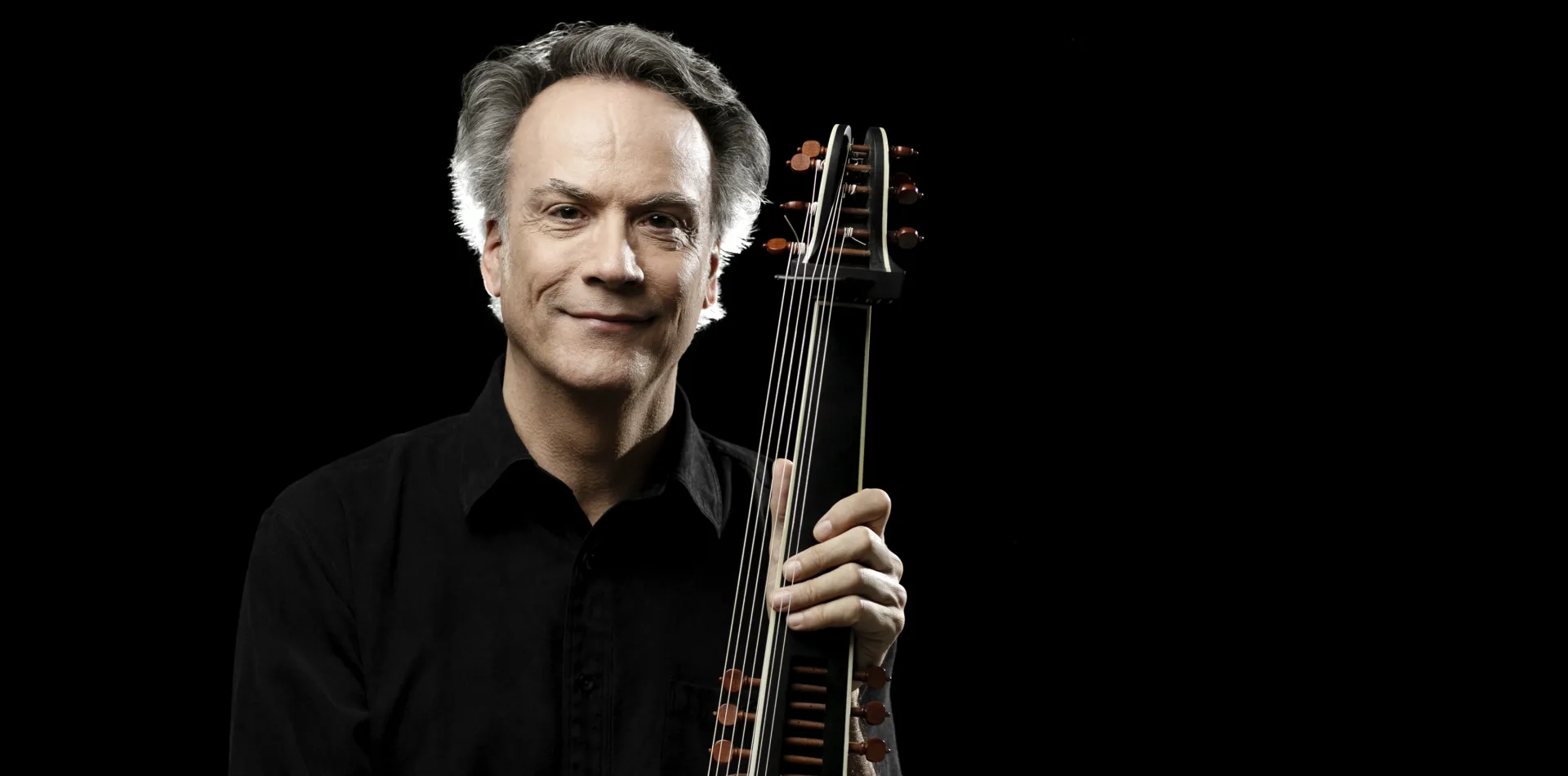
Margaret Little, treble and bass viols
Sylvain Bergeron, archlute
About this concert
Margaret and Sylvain take you on a thrilling journey through time with their exotic instruments, the viola da gamba and the lute. Along the way, you will discover the great hits of the 16th and 17th centuries: lively, virtuoso dances and songs evoking joy and nostalgia in turn. Strong emotions guaranteed!

The art of improvising variations in the 16th and 17th centuries
Who among us hasn't been amazed by the virtuoso improvisations of jazz musicians or surprised and charmed to hear our favorite song performed in a new arrangement? Our ancestors were just like us! The art of improvisation and variation was an integral part of the musical repertoire of every musician in the 16th and 17th centuries, even giving rise to competitions, much like our improvisational theater league.
Our program takes its name from one of the most famous madrigals of the 16th century, Doulce Mémoire by Pierre Sandrin. The beauty and simplicity of its melodic lines and the elegance of its poetry undoubtedly explain the immense popularity of this song throughout the century. There are more than thirty versions, for all kinds of instruments and combinations, ranging from the simplest to the most complex. We have chosen three versions for you.
The madrigal Ancor che col partire also inspired many ornate versions. Ricardo Rogniono's ornamentations are among the most inspired. The type of ornamentation in question is that of “diminutions,” a technique that consists of adding lots of small notes between those of the original song. A very simple melody then becomes unrecognizable and is transformed into a virtuoso piece!
The pieces by Diego Ortiz that open our program are composed on the bass line of the “Passamezzo Antico,” a series of four chords that served as the harmonic pattern for many popular dances of the time in Italy.
John Playford published The Division Violin in 1684. We have chosen a few of these “divisions” that work very well on the treble or bass viol. These variations are written either on grounds (repeated bass lines, as in Pachelbel's famous Canon) or on popular songs such as John Come Kiss Me Now, and the style is reminiscent of the art of our own fiddlers!
| Recercada primera, quarta, ottava | Diego Ortiz (1510-1570) |
| Divisions on a ground The Duke of Norfolk (Pauls Steeple) The Division Violin (John Playford – 1684) | Mr John Banister (c. 1624–1679) |
| Gagliarda – Chiacona - Gagliarda - Corrente a la Francese (solo luth) | Andrea Falconieri (c. 1585-1656) |
| Ricercata Ottava | Giovanni Bassano (1560? – 1617) |
| Diminutions sur « Ancor che col partire » | Ricardo Rogniono (c.1555 – c.1620) |
| Roger of Coverly Divisions upon “John come kiss me now” | The Division Violin |
* * *
| Duo « Doulce Mémoire » (1539) | François de Layolle (1492-1540) |
| Recercada seconda sobre « Doulce Mémoire » | Diego Ortiz |
| Another Ground | Mr John Banister |
| Tollets Ground | (The Division Violin) |
| Toccatta, Corrente I – II (solo luth) | Andrea Falconieri |
| Ricercata per viola bastarda | Aurelio Virgiliano (c. 1540-c. 1600) |
| Dolce Memoy | Vincenzo Bonizzi (début XVIIe siècle) |
| Faronells Division on a Ground (Folia) | The Division Violin |
- Access to the hall for tuning: three hours before the concert.
- One straight-backed chair with a flat seat and one adjustable piano bench, or two piano benches.
- We bring our own music stands.
- Adequate stage lighting to see our scores, but we can also bring music stand lights.
- Light lighting in the hall so that we can see the audience.